


Navy on Land
Our Royal Australian Navy (RAN) has been part of our physical landscape since 1788.
It now owns a vast tract of land facing Cowper Wharf Roadway, Woolloomooloo, a very large multi-storey concrete car park for its maintenance workers and navy personnel and occupies about 30 acres at the tip of Potts Point including Garden Island.
It contains a massive dry dock used for repairs of very large ships owned by the RAN and visiting ships. The dry dock was built during World War Two but, paradoxically, was never completed in time for use during the war.
Garden Island was once a separate island and was our first kitchen garden containing fruit and vegetables to service the fledgling colony. It did not survive due to a lack of fresh water.
However, with the advent of World War Two the federal government requisitioned Garden Island and large prestigious properties facing Sydney Harbour including Jenner, Bomerah, Tarana and others, now demolished.
Potts Point then lost its point.
The Navy then eventually sold some of these properties on the open market. They were then conserved at great cost and are now some of Sydney’s most prestigious sites.
A large accommodation block known as HMAS Kuttabul has been built and a large non-descript administration block at 20A Wylde Street built circa 1958 by Hovens and Kirkwood, architects. Very little is known about this firm.
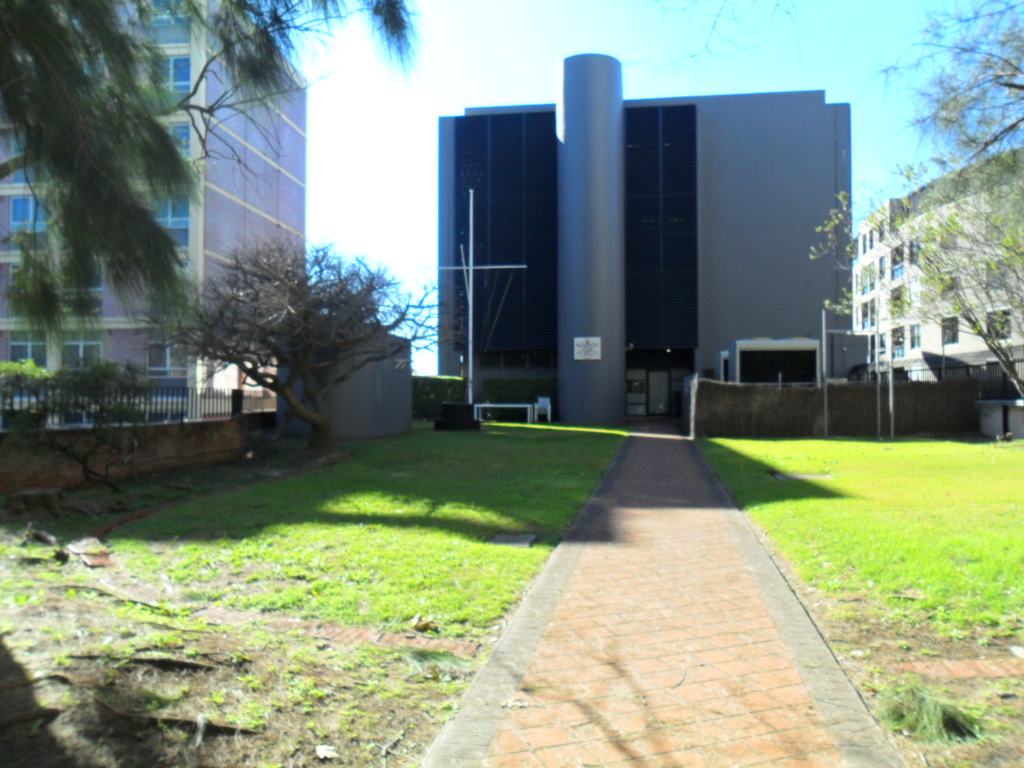
Today’s building at 20A (see image above), a dark grey foreboding monolith with a large empty lawn forecourt.
It is still owned by the Federal Government and is used by the Federal Police but is not the one that was originally designed or intended. A search of Sydney Council’s files indicates that between 14th September 1955 and 19th October 1955 an application was made by Collings Powers, architects, to erect a thirteen-storey building including two lower ground floors and a penthouse comprising ten floors of residential flats and three floors for car parking.
Instead, there is four-level building with a blank facade and very large open area in its forecourt.
It is one of about thirty-three buildings built in the mid-century which explains the different uses and styles of architecture in this postcode.
By Andrew Woodhouse
Heritage Solutions