


Boomerang: From Hollywood Glamour To Australian Rock Royalty
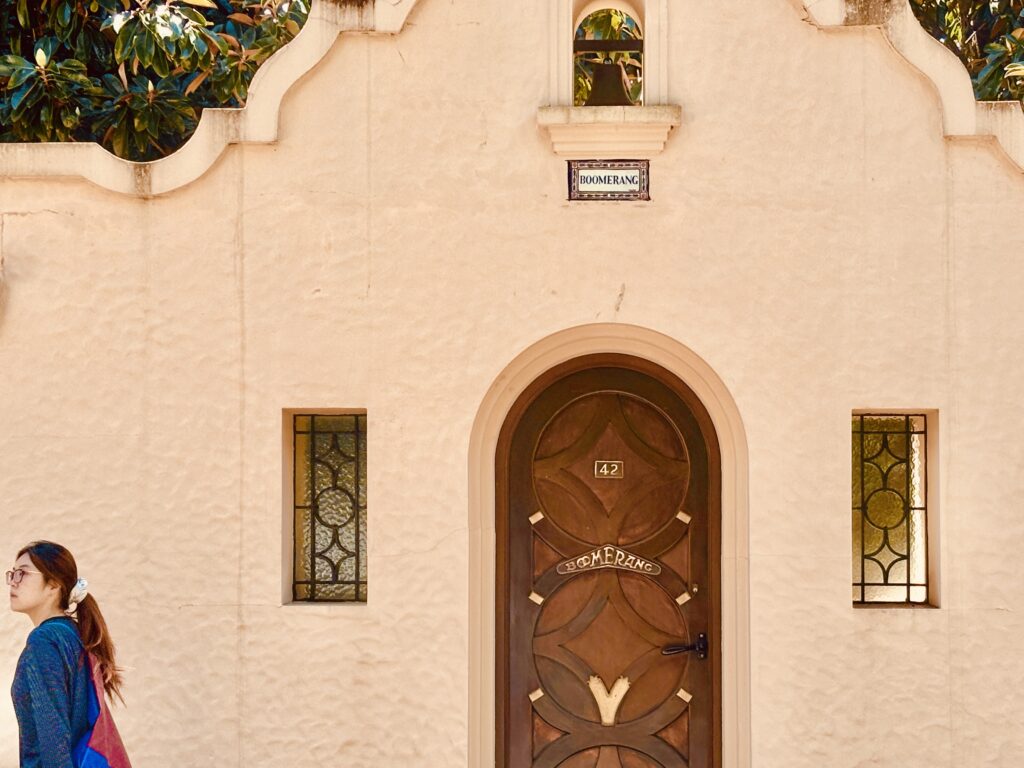
Tucked away behind a genteel façade on Billyard Avenue, the casual passer-by could easily overlook the unassuming walls that conceal one of Australia’s most extraordinary private homes. Overlooking the sparkling waters of Sydney Harbour, the magnificent Spanish Mission-style mansion known as Boomerang has been an Elizabeth Bay landmark for almost a century, its lavish architecture and intriguing history providing a glimpse into a very different era of Sydney life.
Built between 1926 and 1928 for prominent music publisher Frank Albert, Boomerang was inspired by the grand mansions of Hollywood, where Albert and acclaimed architect Neville Hampson travelled in search of inspiration. The result was an extraordinary residence featuring sweeping terraces, ornate archways, fountains, formal gardens and even a private cinema, reportedly capable of accommodating up to 200 guests. With its notable Californian influences and spectacular harbourfront setting, this was a little piece of Hollywood transported to the shores of Sydney.
But behind the mansion’s genteel exterior and sublime harbour setting lies a fascinating connection to Australian culture. Frank Albert was a driving force behind J. Albert & Son, the family music publishing business established by his father Jacques, which initially found success selling musical instruments, including its hugely popular Boomerang-branded mouth organs.
The business subsequently grew into one of Australia’s most influential music enterprises. Under the guidance of Frank’s grandson Ted Albert, it would become a powerhouse of Australian popular music, helping craft the careers of The Easybeats, Billy Thorpe and the Aztecs, The Angels, Rose Tattoo, John Paul Young and, perhaps most famously, AC/DC.
And therein lies a wonderful incongruity. There is something remarkable about the connection between this grand, aristocratic Elizabeth Bay estate and the raw, heaving sounds of the likes of AC/DC and The Angels. Although Frank Albert died in 1962, well before those bands’ emergence, the musical dynasty he helped establish would go on to play an enormous role in shaping the soundtrack of modern Australia, indeed carving out a significant place in the wider history of rock’n’roll.
Following Albert’s death, Boomerang remained largely unoccupied for many years before making headlines in 1978 when it became Australia’s first million-dollar residential property sale. Since then, it has continued to break property records, notably selling for $80 million in a deal struck in 2023, when the family of billionaire Lindsay Fox sold the estate to property investor Hoang Trang Do. And in recent weeks, reports have emerged that Boomerang may once again be on the market, this time with expectations of around $100 million.
Today, surrounded by apartment buildings, including the newly built “Billyard Ave”, and with few afforded the opportunity to glimpse what lies beyond its long walls, it remains a true architectural wonder and a remarkable survivor from a golden era of Sydney life, its glamorous origins and unlikely rock’n’roll connections adding another fascinating layer to the history of this sparkling harbourside neighbourhood.
By Adam Gibson
Photo by Adam Gibson